
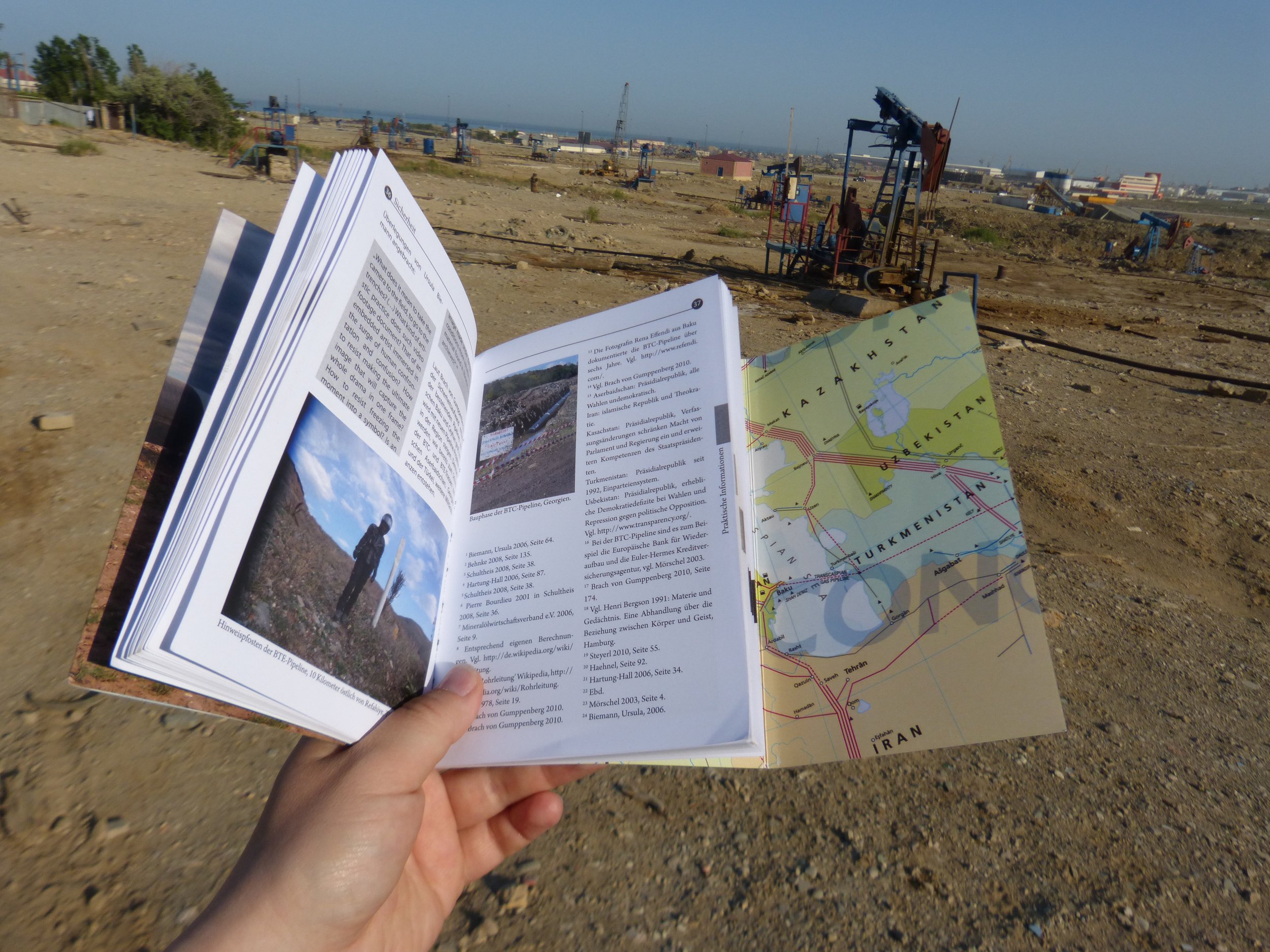
Anne Baumann’s artistic practice explores social, ecological, and political interrelations through a combination of artistic research and documentary, participatory and performative approaches. A central focus of her practice is the interplay between individually lived experiences and political, economic and geopolitical structures. She translates historical documents, geographical data, local observations and personal experiences into artistic processes. Research material is transformed into forms such as video, cartography, installation, drawing and public intervention.
Her works question established notions of space, society and nature, opening up alternative perspectives on these interrelations. Baumann does not understand landscape as a neutral backdrop, but as a space shaped by political, economic and social forces. The inclusion of human and non-human actors broadens the perspective to questions of participation, dependency and agency. At the same time, she examines the effects of technological and bureaucratic systems on autonomy, social participation and resources. Her artistic practice understands documentation as a critical tool for examining social reality and enabling independent forms of perception.
Anne Baumanns künstlerische Praxis untersucht gesellschaftliche, ökologische und politische Zusammenhänge. Dabei verbindet sie künstlerische Recherche mit dokumentarischen, partizipativen und performativen Verfahren. Ein zentrales Interesse gilt den Wechselwirkungen zwischen individuellen Lebensrealitäten und politischen, ökonomischen und geopolitischen Strukturen. Historische Dokumente, geografische Daten, lokale Beobachtungen und persönliche Erfahrungen überführt sie in künstlerische Prozesse. Recherchematerial wird dabei in Formen wie Video, Kartografie, Installation, Zeichnung und öffentliche Intervention übersetzt.
Ihre Arbeiten hinterfragen etablierte Vorstellungen von Raum, Gesellschaft und Natur und eröffnen alternative Perspektiven auf diese Zusammenhänge. Landschaft versteht Baumann nicht als neutrale Kulisse, sondern als politisch, ökonomisch und sozial geprägten Raum. Die Einbeziehung menschlicher und nichtmenschlicher Akteure erweitert den Blick auf Fragen von Teilhabe, Abhängigkeit und Handlungsmacht. Zugleich untersucht sie die Auswirkungen technologischer und bürokratischer Systeme auf Selbstbestimmung, soziale Teilhabe und Ressourcen. Ihre künstlerische Praxis versteht Dokumentation als kritisches Instrument, das gesellschaftliche Wirklichkeit untersucht und eigenständige Wahrnehmung ermöglicht.